New, Never Installed may support a restoration, new aircraft build, engine installation, maintenance project, spare inventory requirement, or replacement-propeller search.
Whether buyers search for a Sensenich Propeller P/N 74DM6-0-60, Sensenich 74DM6 Propeller, or 74DM6-0-60 Aircraft Propeller, complete identification should guide the purchase.
These related phrases connect the product with buyers seeking a durable and comparatively straightforward general aviation propeller design.
A Lycoming O-320 Propeller may only be appropriate for selected engine and airframe combinations, even when the basic engine family appears compatible.
The Two-Blade Aircraft Propeller, Sensenich Aircraft Propeller, Replacement Aircraft Propeller, and Certified Aircraft Propeller phrases can help professional buyers locate a component for maintenance, restoration, new construction, or inventory.
Why the Complete Propeller Designation Matters
Complete identification reduces unsuitable purchases and gives maintenance professionals the information required for further review.
Reliable traceability improves the commercial and maintenance value of the Sensenich 74DM6 Propeller.
Separating Storage History from Serviceability
This condition can provide significant value, but it does not independently confirm current serviceability after storage, transport, or repeated handling.
New, Never Installed.
Matching Propeller Design to Aircraft Performance
Correct matching protects the engine, propeller, and aircraft from unsuitable loading or operation.
Diameter influences ground clearance, tip speed, aerodynamic load, and airframe compatibility.
Aluminum Aircraft Propeller Construction
Metal construction does not eliminate the possibility of fatigue, corrosion, impact damage, improper material removal, dimensional loss, or storage deterioration.
Identification markings should remain legible and protected during handling.
Avoiding Unverified Propeller Size Claims
The 74-inch diameter description should be confirmed through the complete model designation, manufacturer data, available records, and suitable physical measurement.
Blade-tip shape, symmetry, and previous alteration can influence measurement accuracy.
Blade Pitch and Engine Loading
Verified configuration helps buyers understand the intended application of the 60-Inch Pitch Propeller.
A blade-to-blade pitch difference can contribute to vibration, reduced efficiency, and unequal aerodynamic loading.
Selecting an Approved Propeller Installation
Aircraft-specific research reduces unsuitable fitment and loading concerns.
Aircraft modifications, engine conversions, supplemental approvals, spinner changes, cowling alterations, and landing-gear configurations may influence propeller eligibility or clearance.
Maintaining Blade Symmetry and Balance
Blade comparison should include the faces, backs, roots, leading edges, trailing edges, tips, and hub transitions.
Storage supports should protect both blades without applying uneven pressure.
Hub and Mounting Configuration
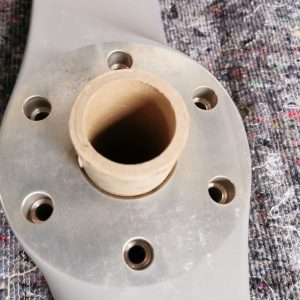
The propeller hub should match the receiving engine flange, pilot diameter, bolt pattern, approved spacer arrangement, spinner components, and required installation hardware.
Professional hardware selection protects the engine and Replacement Aircraft Propeller.
Evaluating Scratches, Dents, and Finish Damage
The leading edges should be inspected for dents, scratches, gouges, corrosion, coating damage, packaging abrasion, and transportation impact.
Suspicious areas should be examined carefully after the wrapping is removed using appropriate handling procedures.
Protecting the Fixed-Pitch Aluminum Propeller
Discoloration, white residue, paint bubbling, coating separation, staining, or pitting should be evaluated instead of dismissed automatically as cosmetic.
Protective covers should prevent contamination and impact without encouraging condensation around the aluminum.
Reviewing Propeller Release Documentation
Certified design status does not automatically establish the present serviceability, airworthiness, or installation eligibility of an individual propeller.
Organized records strengthen the commercial value of the Certified Aircraft Propeller.
Maintaining Aircraft Propeller History
The manufacturer data plate should remain legible, securely attached, and consistent with the physical propeller, invoice, packaging, and supplied documents.
Available records may include factory paperwork, conformity documents, release certificates, storage records, purchase invoices, inspection reports, and aircraft-project information.
Pre-Purchase Inspection Checklist
The seller should provide photographs of both sides of each blade, leading edges, trailing edges, tips, hub, mounting holes, data plate, packaging, and any damaged areas.
- Resolve identity, applicability, dimensions, condition, and package-completeness questions before payment.
- Arrange qualified propeller evaluation whenever physical condition, dimensions, documentation, or installation eligibility remain uncertain.
- Report freight damage, missing documentation, identification differences, corrosion, finish defects, blade damage, or dimensional discrepancies promptly.
Safe Freight Handling Procedures
Moisture-resistant wrapping may be appropriate when it does not trap condensation against the aluminum.
Pre-shipment photographs can document the blades, hub, packaging, identification, and included parts before collection.
Protecting the Propeller Before Installation
During storage, the propeller should remain clean, dry, supported, protected from impact, and separated from corrosive chemicals or uncontrolled environmental exposure.
The unit should not be stored directly on damp concrete, exposed ground, unstable shelving, or areas vulnerable to roof leaks.
Mounting the Replacement Aircraft Propeller
Professional installation protects the propeller, engine, and airframe.
Spinner components should maintain suitable alignment, attachment, and clearance without causing stress or imbalance.
Initial ground operation should monitor vibration, RPM, unusual noise, mounting security, spinner behavior, and other abnormal indications.
Caring for the Fixed-Pitch Aluminum Propeller
Cleaning should use suitable materials and methods that do not attack aluminum, coatings, markings, or data plates.
Pilots and operators should report new vibration, visible blade damage, unusual noise, or performance changes promptly.
Evaluating Never-Installed Propeller Pricing
Original packaging can improve presentation and provenance but does not replace physical examination.
Buyers should compare complete and documented propeller packages rather than price alone.
New, Never Installed
The Sensenich Propeller – P/N 74DM6-0-60
Careful technical and commercial review can reduce compatibility problems, missing-hardware read more expenses, storage-related concerns, installation delays, inspection costs, and documentation issues.
Whether the product is described as a 74-Inch Aircraft Propeller, 60-Inch Pitch Propeller, Lycoming O-320 Propeller, or General Aviation Propeller, aircraft-specific applicability remains essential.
With prompt attention to scratches, coating damage, corrosion, vibration, loose hardware, spinner concerns, impact events, and environmental exposure, the installation can preserve its operating potential.